We are witnessing the birth of a new digital industrial revolution. Artificial intelligence has captivated the minds and hearts of the tech world, and human knowledge is being categorized, tagged and shared thanks to the advent of Large Language Models. We are now living in the data revolution era where knowledge and intelligence are becoming a new commodity that almost anyone can access.
This tremendous acceleration in digital forward thinking does, however, come with a new set of challenges that need to be understood and addressed if we want to stay at the forefront of this revolution.
The Spatial Knowledge Gap
Here is the challenge that few people are talking about: spatial knowledge and data are scarce. The vast majority of data collected for training LLMs is textual information — documents, web pages, books, code. Meanwhile, the physical, spatial world is being left undocumented and underutilized.
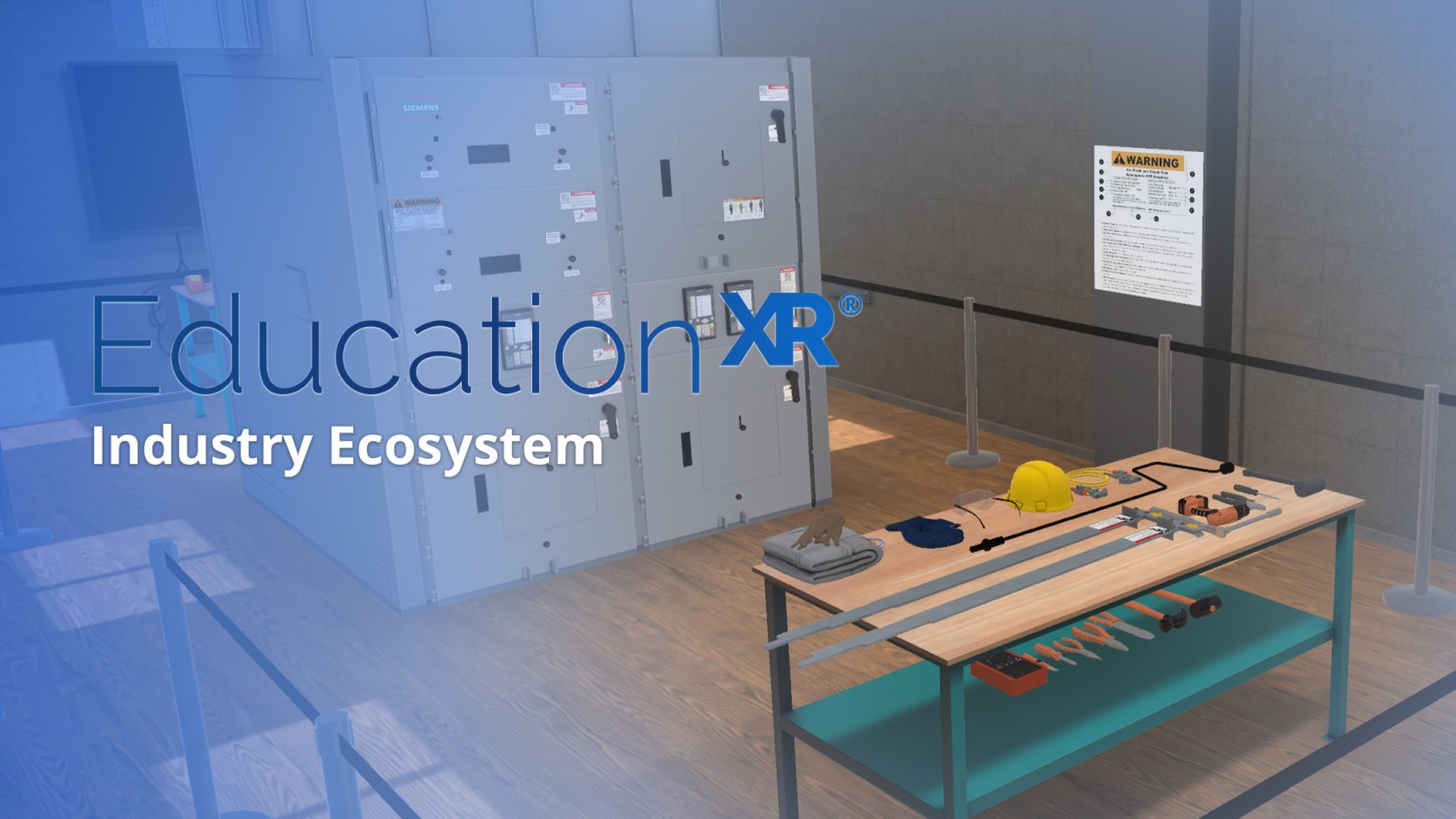
Think about what that means for industry. A veteran manufacturing engineer who has spent 30 years maintaining a turbine knows things that exist nowhere in any document. The way a component sounds when it's properly seated. The feel of a valve that's about to fail. The spatial relationship between systems that only makes sense when you're standing in front of the machine. That knowledge lives in the engineer's hands, eyes, and muscle memory — and when that engineer retires, it walks out the door.
This is not a hypothetical problem. It's happening right now, across every industry. We are losing an incredible amount of institutional knowledge as older generations of employees move out of the workforce, and our antiquated educational models are showing their age by failing to address these issues.
Text-based training can't capture spatial knowledge. Video gets closer, but it's passive — you can watch someone perform a procedure, but you can't practice it. Slide decks and manuals are even further removed from the reality of hands-on work.
This is where real-time 3D content will show its biggest value: spatially documenting processes, knowledge and intelligence, bridging the gap between generations of workers, and accelerating the speed at which industry can grow its workforce.
The 3D Revolution Is Already Underway
Leading industry partners are making strides today by digitalizing their institutional knowledge in 3D, accelerating training, and making it commonplace thanks to multi-modal delivery platforms. A multitude of use cases across healthcare, manufacturing, automotive, energy and defense are being developed today by our customers at EducationXR.
In healthcare, surgical teams are practicing complex medical device procedures in interactive 3D simulations before they ever touch a patient. In manufacturing, new operators are learning equipment maintenance through hands-on virtual replicas that capture the exact spatial relationships and procedural sequences that experienced operators have internalized over decades. In defense, teams are training on equipment and environments that would be too dangerous, too expensive, or too logistically complex to access in the real world.
These aren't pilot programs or innovation lab experiments. These are production training systems used daily by organizations like Mayo Clinic, GE, Merck, ThermoFisher, and Volkswagen. The spatial knowledge that was once locked inside the heads of veteran employees is being captured, made interactive, and distributed globally.
And the key to this new revolution? The democratization of 3D development.
The Video Parallel: A Story We've Seen Before
This is a story we have observed in the past with video. Video production was once accessible only to teams of professional filmmakers with expensive cameras, editing suites, and specialized expertise. Throughout the decades, the tools became commonplace. Consumer cameras improved. Editing software became affordable and intuitive. Distribution shifted from broadcast networks to YouTube.
Today, anyone with a phone and a laptop can produce and distribute professional-quality video without complex or expensive setups. The knowledge barrier that once separated professional video producers from everyone else has essentially disappeared.
This same paradigm is happening today with real-time 3D — and it's happening faster than the video transition because AI is accelerating every step of the process.
Five years ago, creating an interactive 3D training experience required a team of Unity developers, 3D artists, and months of development time. The skills required — C# programming, shader development, 3D modeling, physics simulation — were deep specializations that took years to acquire.
Today, industry partners across all verticals are asking for tools and workflows that subject matter experts can utilize on their own, without having to be expert programmers. And platforms are delivering. Visual scripting systems translate complex programming logic into intuitive node-based interfaces. Drag-and-drop authoring tools let non-technical users compose interactive 3D scenes. One-click publishing deploys content across VR headsets, phones, tablets, and desktops without any platform-specific knowledge.
The results have been transformative. Subject matter experts — product managers, marketing professionals, instructional designers, clinical educators — are now becoming interactive 3D developers. They're owning their companies' digital workflows and becoming independent in the journey to 3D digitalization. They don't need to file a development ticket and wait in a queue to update a training module. They open the authoring tool, make the change, and publish it to every device in minutes.
Where AI Meets 3D: The Convergence
We stand at the intersection of two transformative forces: real-time 3D technology and artificial intelligence, each amplifying the other's potential.
AI is making 3D content creation faster and more accessible in several concrete ways:
Asset generation. AI tools are beginning to generate 3D models, textures, and environments from text descriptions or 2D references. What once required a 3D artist working for days can increasingly be accomplished in minutes. This dramatically lowers the barrier to populating immersive training environments with realistic, contextually appropriate content.
Intelligent authoring assistance. AI can suggest interaction logic, assessment criteria, and procedural sequences based on training objectives. An instructional designer describing a training scenario in natural language can receive a suggested 3D scene layout, interaction flow, and scoring rubric — then refine it using visual tools rather than building from scratch.
Adaptive training experiences. AI embedded within immersive training can observe learner behavior in real time and adjust the difficulty, pacing, and feedback dynamically. A learner who masters steps quickly can be advanced to more complex scenarios, while one who struggles receives additional guided practice — all without the content creator programming branching logic manually.
Knowledge extraction and documentation. AI can assist in the capture and structuring of institutional knowledge. When a veteran engineer describes a maintenance procedure, AI can help translate that verbal description into a structured training scenario, identifying the key steps, decision points, and common failure modes.
The convergence is more than additive. AI makes 3D content easier to create, and 3D provides AI with the spatial context it currently lacks. As AI becomes increasingly capable of understanding and generating knowledge, and 3D platforms empower anyone to spatially document and share that knowledge, we are witnessing the foundation of a new digital ecosystem where information is not only accessible but truly experiential.
What This Means for Enterprise
For enterprise organizations, the democratization of 3D means several things simultaneously:
The talent bottleneck is dissolving. You no longer need a team of specialized developers to build immersive training content. Your subject matter experts — the people who actually understand the procedures, equipment, and workflows — can create and maintain training content directly.
Knowledge preservation becomes operational. Instead of hoping that retiring experts will write comprehensive documentation, organizations can capture their spatial knowledge in interactive 3D formats that are inherently more complete and more usable than text-based alternatives.
Training scales without proportional cost increases. When content creation is fast and doesn't require specialized developers, building 50 training modules becomes practical, not just the 5 that your development budget could afford.
Cross-platform delivery means universal access. The democratization isn't just about creation — it's about distribution. When a single piece of 3D content reaches every device type from a single publish action, the reach of spatial knowledge extends to the entire workforce.
The Road Ahead
The convergence of immersive 3D content with contextually aware AI will redefine how industries train, collaborate, and innovate. We're moving toward a world where knowledge is not just documented in static text, but captured as living, interactive experiences that evolve alongside human ingenuity.
The organizations that recognize this shift early — and invest in platforms that empower their workforce to create, share, and learn through spatial media — will build a compounding advantage. Every piece of institutional knowledge captured in 3D is knowledge that won't be lost to retirement. Every training module built by a subject matter expert is a module that didn't require a six-figure development contract. Every employee who can access immersive training from their phone is an employee who isn't waiting for a headset.
The democratization of 3D is not a future event. It's happening now, and it's accelerating. The question for enterprise leaders is not whether to participate, but how quickly they can enable their teams to start building.
---
EducationXR empowers enterprise teams to create, deploy, and distribute immersive 3D experiences across all devices — without specialized development skills. See how it works or learn more about our platform features.